Introduction
Hi! My name is Yuto Kaneko, and I’m a software engineer at Money Forward in Workflow Platform Development Division.
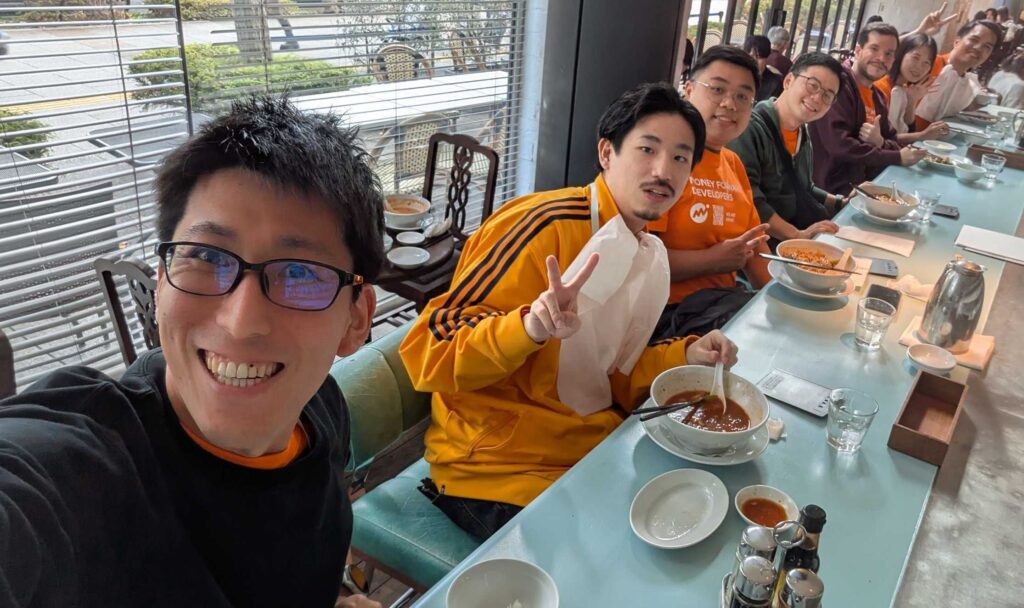
I attended JSConf JP 2025 on November 16th, and the Pre Event on November 15th. It was my first time attending JSConf JP in person and I was really excited to learn about the latest trends in the web development community.
This year, our company, Money Forward, participated as a Premium Sponsor. I joined the event not only as an attendee but also as a speaker for the sponsor session.
It was a very inspiring two days. I want to share what our company did and what I learned from the event.
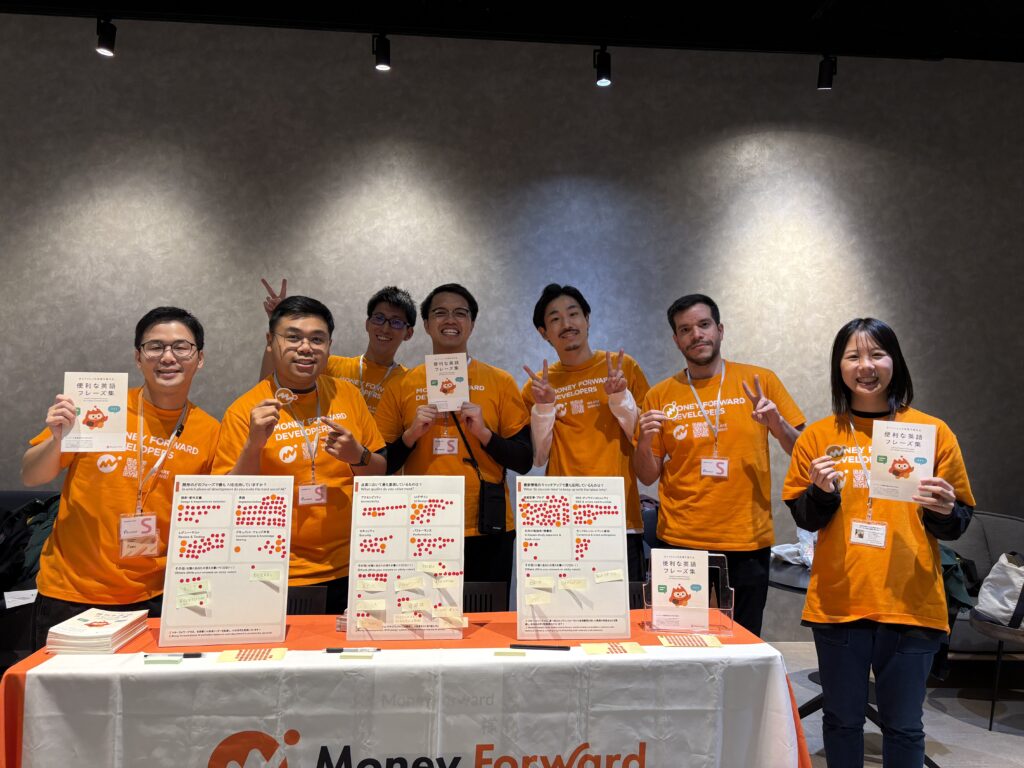
I’m the one in the back row.
Money Forward’s Involvement
We have published a detailed report about our sponsor activities in another blog post. (Written in Japanese)
Report of our participation in JSConf JP 2025: LT and Booth/JSConf JP 2025 に参加しました!登壇とブース出展のレポート
Here is a quick summary of our team’s contribution:
Lightning Talk (LT)
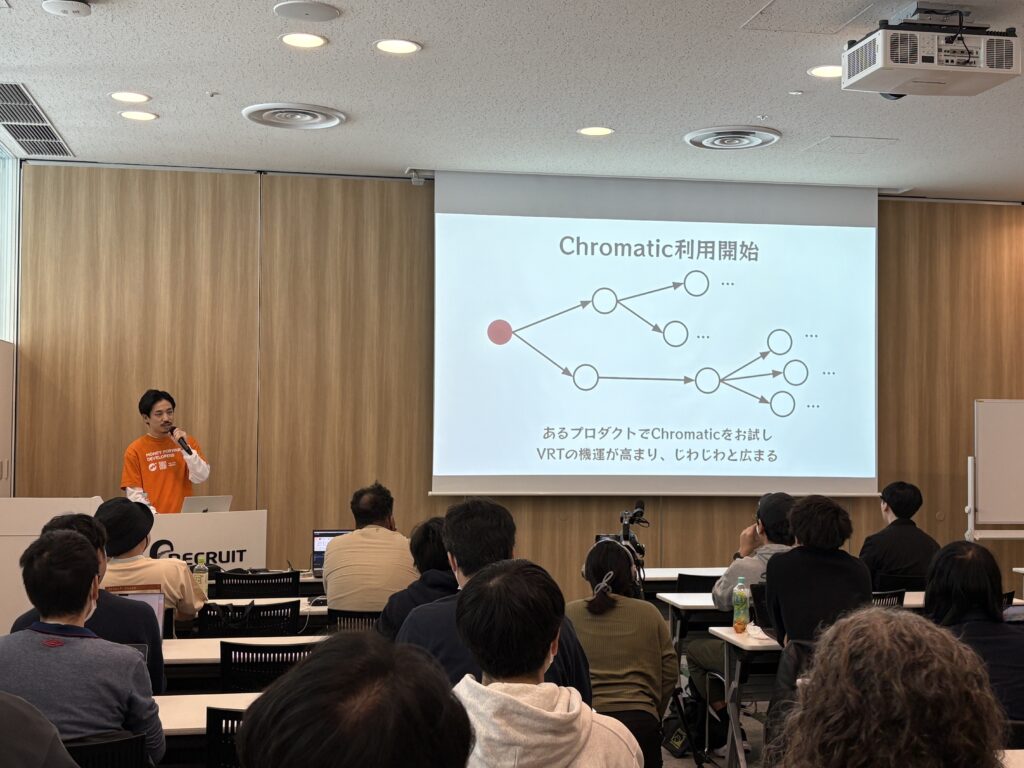
My colleague, Taiga Kiyokawa, gave a talk titled “Cross-functional strategy for Visual Regression Testing —Should we keep using Chromatic?—”. He shared how we use Visual Regression Testing (VRT) across more than 20 products in the B2B domain. He talked about standardizing VRT strategies and managing costs.
Slides: Cross-functional strategy for Visual Regression Testing —Should we keep using Chromatic?—
Sponsor Booth
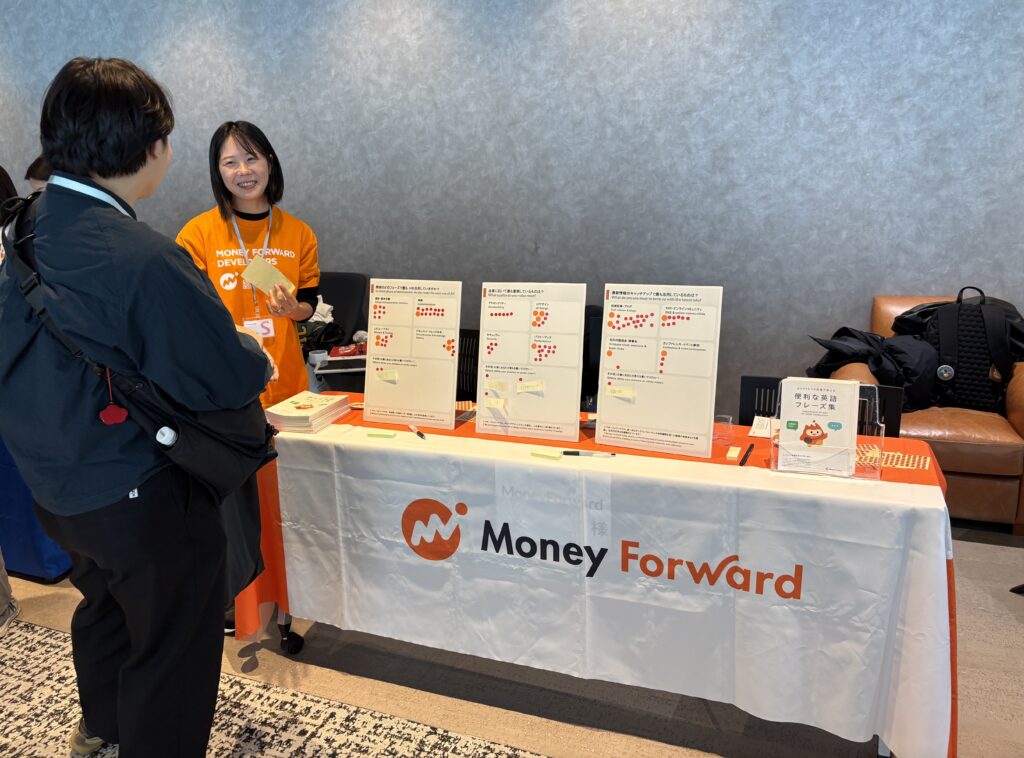
We had a booth with the theme “Tell us your honest opinion!”. We asked visitors to vote on three topics:
- Quality: What do you value most? (Accessibility, UI Design, Security, Performance?)
- AI: In which phase do you use AI the most? (Implementation, Design, Testing?)
- Learning: How do you catch up with new technologies? (Blogs, SNS, Official Docs?)
It was great discussing these topics with so many developers. We also distributed an “English Phrasebook” to introduce our efforts towards globalization in our engineering organization.
My Presentation: Sponsor Session
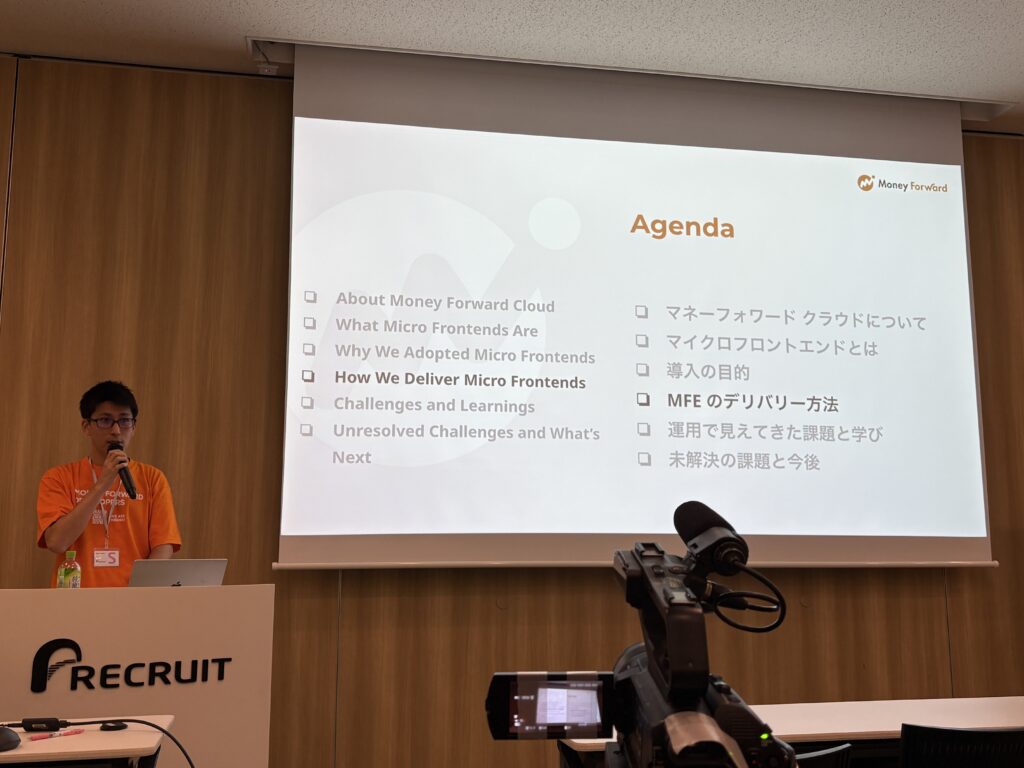
I had the honor of speaking in the sponsor session.
Slides: Building a Shared Platform with Micro Frontends: Operational Learnings
In Money Forward Cloud, we built a common platform for approval workflows. We use Micro Frontends based on Web Components. In this session, I talked about our 2-year journey since the release in July 2023. I explained our trial-and-error process and why we made certain architectural decisions.
Key Topics I Covered
- Trade-off: flexibility vs. integration costs: How much should we standardize? How we balance flexibility with integration costs.
- Limits of loose coupling: How to design loose coupling between Micro Frontends and container applications.
- Authentication architecture issues and improvements: The background of our architecture changes in authentication and authorization.
- Consistent UI: Issues with design consistency within the same page.
- Challenges and What’s Next: Issues with E2E testing maintenance, asset size growth, and i18n. What we are doing to address these issues.
After the session, I received many questions from the audience and had a great conversation with them. I was very happy to hear that my talk was helpful for them.
What I Learned: The “Foundation” of the Web
The most important takeaway for me was a change in how I view the Web itself.
I had the opportunity to speak directly with people from standardization bodies and browser vendors (including attendees of TPAC and engineers from Google). This experience completely changed my perspective.
1. From Competition to Cooperation
Before this conference, I honestly had a biased view. When I looked at browser compatibility, I often thought, “Why is this browser so slow to implement this?” I used to imagine that browser vendors were fighting against each other.
However, the reality is very different.
I learned that the engineers building these browser engines know each other well. They understand each other’s situations. They are not enemies; they are partners working together to build a better product.
2. The Meaning of “Don’t Break the Web”
I learned more about the history of JavaScript from the keynote session, From Chaos to Harmony: A History of JavaScript.
As Allen Wirfs Brock mentioned, the Web started with different organizations moving individually. But today, the Web is built on “Harmony.”
They really value “Don’t Break the Web” and the following principles:
- Consensus
- Interoperability
- Backwards Compatibility
They are making a huge effort to ensure that new changes do not break existing websites. Even fixing a bug can break the Web if old sites depend on that bug. I realized that their careful process is what protects the stability of the Web we use every day.
I also realized how important it is to have multiple browser engines. I talked with Kadir Topal from Google, and he said that if there were only one browser, bugs would become specifications. I learned how they value the specification process.
Through the collaboration of different vendors and checking each other, we can maintain a healthy and standard Web.
3. Security through Standards
In Ruben Bridgewater’s session, Shrink Supply Chain Risk in JS, I learned a valuable lesson: “Delete unnecessary dependencies.”
I felt this also connects to the foundation of the Web.
Thanks to the Interop initiative, browsers are becoming more compatible. This means we can often use standard Web features instead of old external libraries (polyfills). Removing unnecessary code is not just good for performance; it is essential for security to reduce supply chain risks.
4. We Are Not Just Observers
I asked Mr. Topal, “What can I do as a developer?” He gave me a clear answer. We don’t have to simply wait for updates.
- VOTE: From the feature list on Web Platform Status, we can jump to each browser’s request page and vote with reactions.
- COMMENT: On those pages, we can also leave comments or feedback on the proposals.
- SHARE: We can share concrete use cases so browser vendors can see how we want to use these features.
I could also tell him our opinions and requests, and he listened to us really carefully. It was a great experience to talk with him.
Conclusion
Talking to the people who create the “foundation of the foundation” was a deeply moving experience. They are sincere, kind, and passionate people.
I want to say “Thank you” to them for their continuous effort to protect the Web.
Going forward, I want to contribute to this ecosystem not just by writing code, but by participating in the feedback process.