
Introduction
Hi everyone. I’m Dylan, currently working as a Backend Engineer and a Group Leader at Money Forward, focusing on maintaining and improving our Ruby on Rails codebases.
As the title suggests, RubyKaigi 2026 was held in Hakodate, Hokkaido, for three days from Wednesday (April 22nd) to Friday (April 24th), 2026.
Money Forward was a Gold sponsor for RubyKaigi again this year, and I was lucky enough to attend RubyKaigi 2026 in Hakodate as part of that journey. It was my first RubyKaigi, and honestly I did not know what to expect beyond “a big Ruby conference.” What I got was a week that felt larger than the venue: a linear story that started with a cancelled flight and ended with me already planning a return trip to Miyazaki.
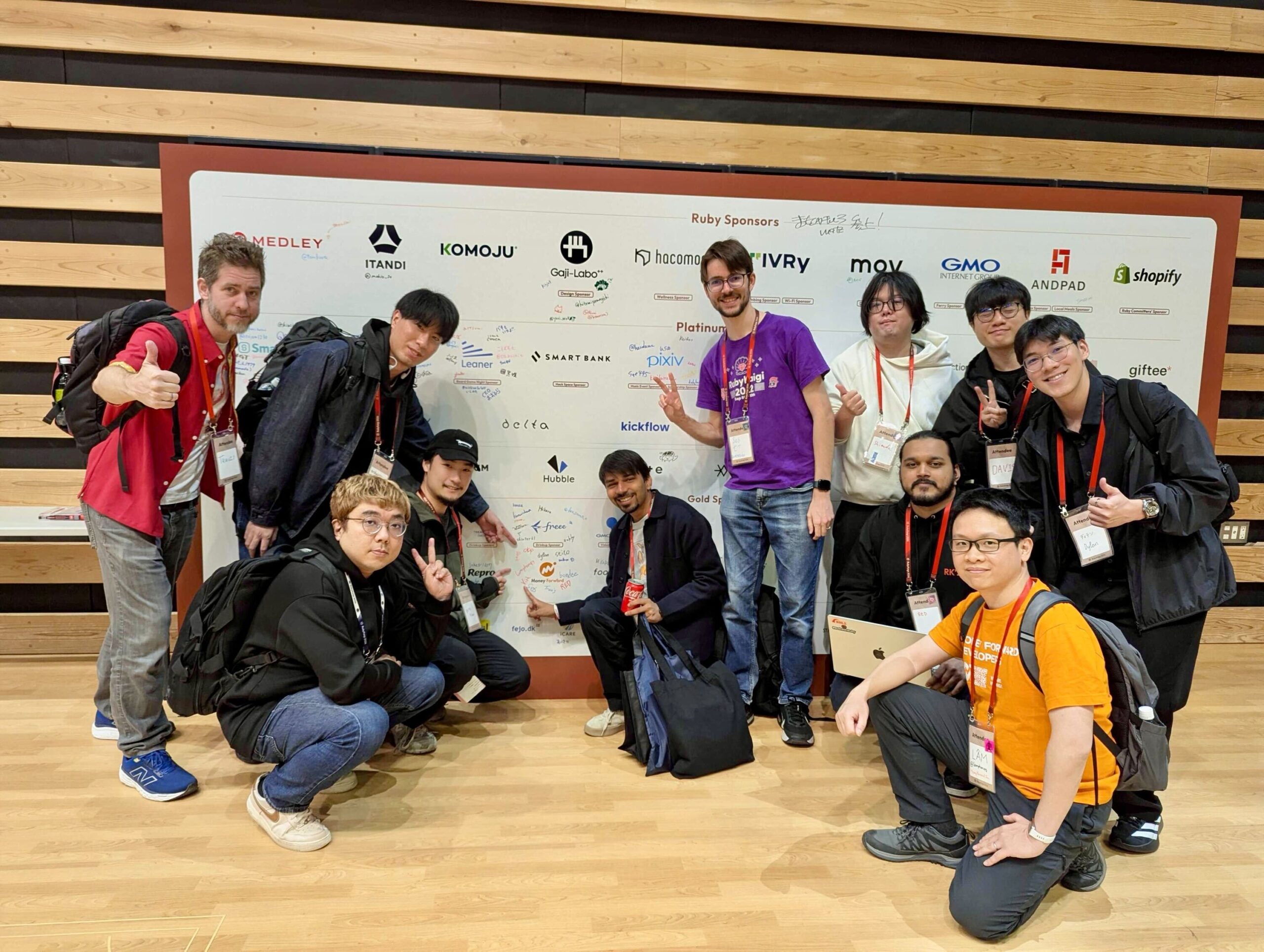
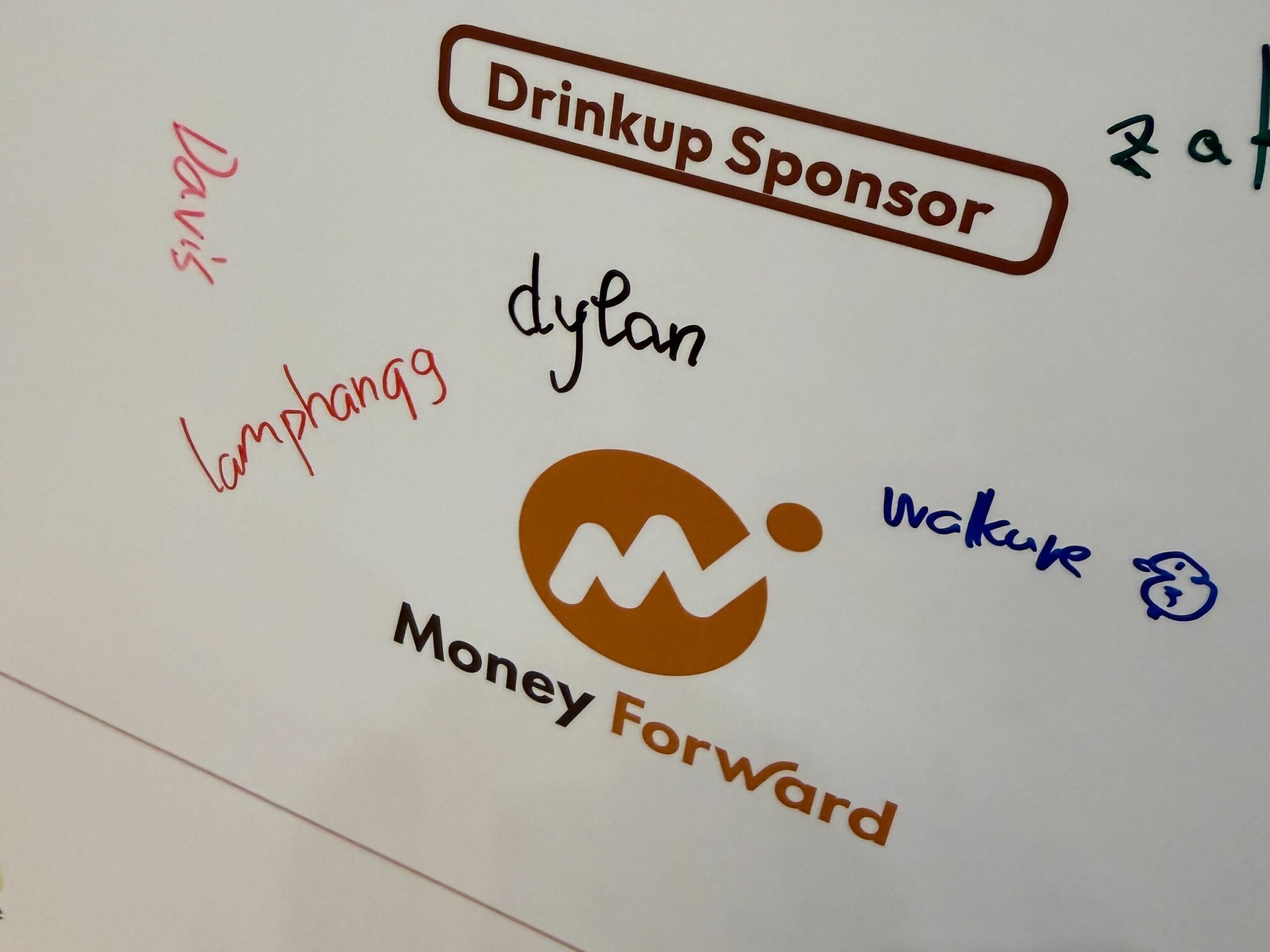
Money Forward engineers and sponsor presence
Day 0 — When the trip refused to go as planned
The week began with chaos. On day 0, severe disruption to flights into Hakodate meant many Rubyists (myself included) could not fly in on schedule. After a quick decision, I cancelled my flight, rebooked onto the Shinkansen, and spent roughly seven hours getting from Osaka to Hakodate. It was long and tiring, but watching Japan roll past the window turned the detour into its own memory. I finally stepped into Hakodate around 9 p.m.—far later than I had hoped—yet I was still on time for what mattered: day one of RubyKaigi.
Day 1 — First contact with the scale of RubyKaigi
The atmosphere in the hall
I walked into the venue the next morning and immediately understood I was not at an ordinary meetup. The scale hit first: wide halls, sponsor rows, swag tables, and a steady noise of conversations in more languages than I could count. People compared notes on which room to sprint to next, traded stickers, and lined up for coffee without ever feeling unfriendly—more like a festival where everyone defaults to helpful. Because Money Forward was sponsoring the event, I also felt a quiet sense of pride seeing our company there alongside the rest of the community supporting Ruby.
The opening keynote grounded everything in Hakodate: the visual identity drew from Ruby and the city itself, including the star-shaped Goryokaku, with the Ruby mark at the center. Seeing the conference logo next to an aerial photo of Goryokaku made the design story click instantly.
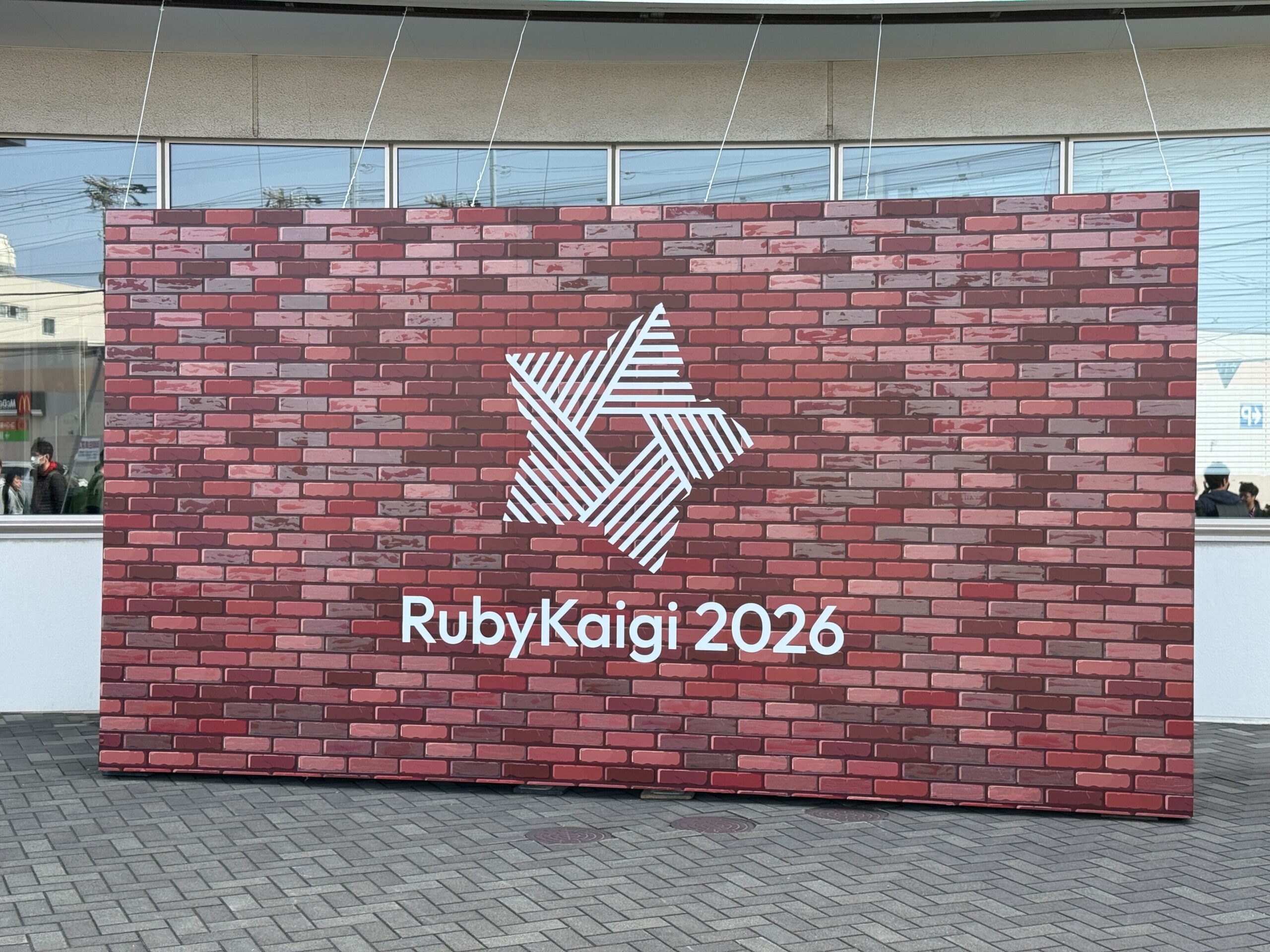
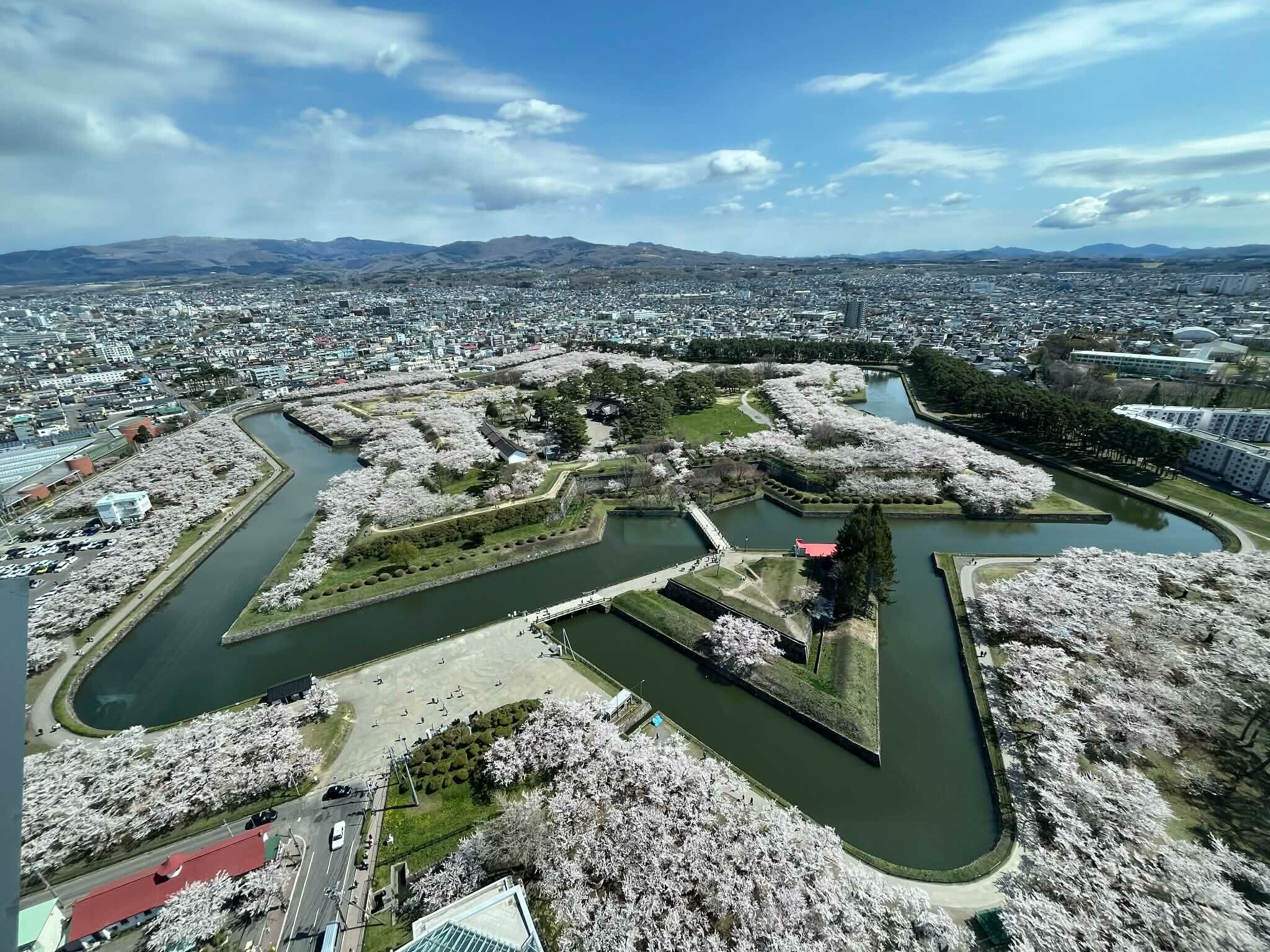
Logo and Goryokaku
We also heard where Ruby is heading—including Ruby Box as part of the Ruby 4 story—which left me, still relatively new to the ecosystem, genuinely curious about what comes next.
Sessions that particularly impressed me
After the keynote I did what most first-timers do: I hopped between rooms, trying not to miss too much. These are the sessions I caught and what I remember taking away from each.
“When can you skip a test? Tracking test impact” – Andrey Marchenko
The talk framed testing as something you can reason about with impact data, not only gut feeling: which tests actually matter after a change, and when you can safely skip work without pretending nothing broke. As someone who lives in CI logs at work, it felt practical—less “always run everything,” more “know what you are trading off.”
“Million-Agent Ruby: Ractor-local GC in the age of AI” – Justin Bowen
This one leaned into where Ruby might go when workloads look more like many agents and concurrent work. The discussion around Ractor and GC was dense, but the headline for me was clear: the community is seriously asking how Ruby’s runtime should evolve when parallelism and scale stop being niche topics.
“Exploring RuboCop with MCP” – Koichi ITO
Here the speaker connected RuboCop to the Model Context Protocol—essentially opening a path for editors and assistants to interact with linting and style rules in a structured way. I left thinking less about a single tool and more about how everyday Ruby workflows might plug into broader tooling ecosystems.
“Digits, Digits, and Digits (BigMath)” – Tomoya Ishida
The one that shook me most in terms of pure numbers. The speaker explained performance gains so dramatic that, for one illustrative case at the scale of 100,000,000 digits, the narrative went from on the order of 60,000 years of compute down to about 150 seconds—on the order of 12.6 billion times faster. The room felt like a great university lecture: hard ideas, clear explanations, and contagious enthusiasm.
When my brain needed a break, lunch was already part of the RubyKaigi experience: bentos, food trucks, and long tables where strangers compared notes on which line was worth it. That rhythm—talks, hallways, food, repeat—became the heartbeat of the week.
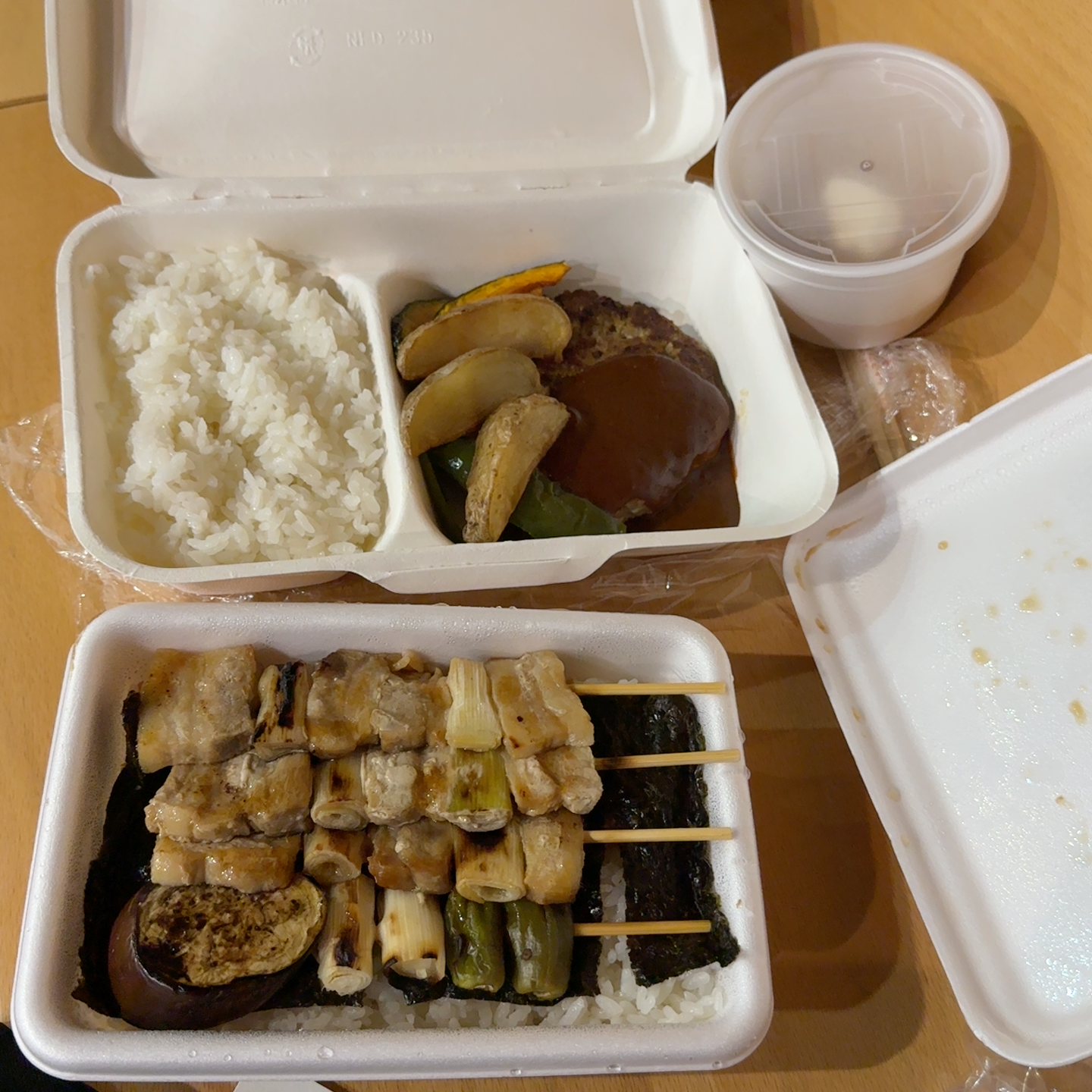
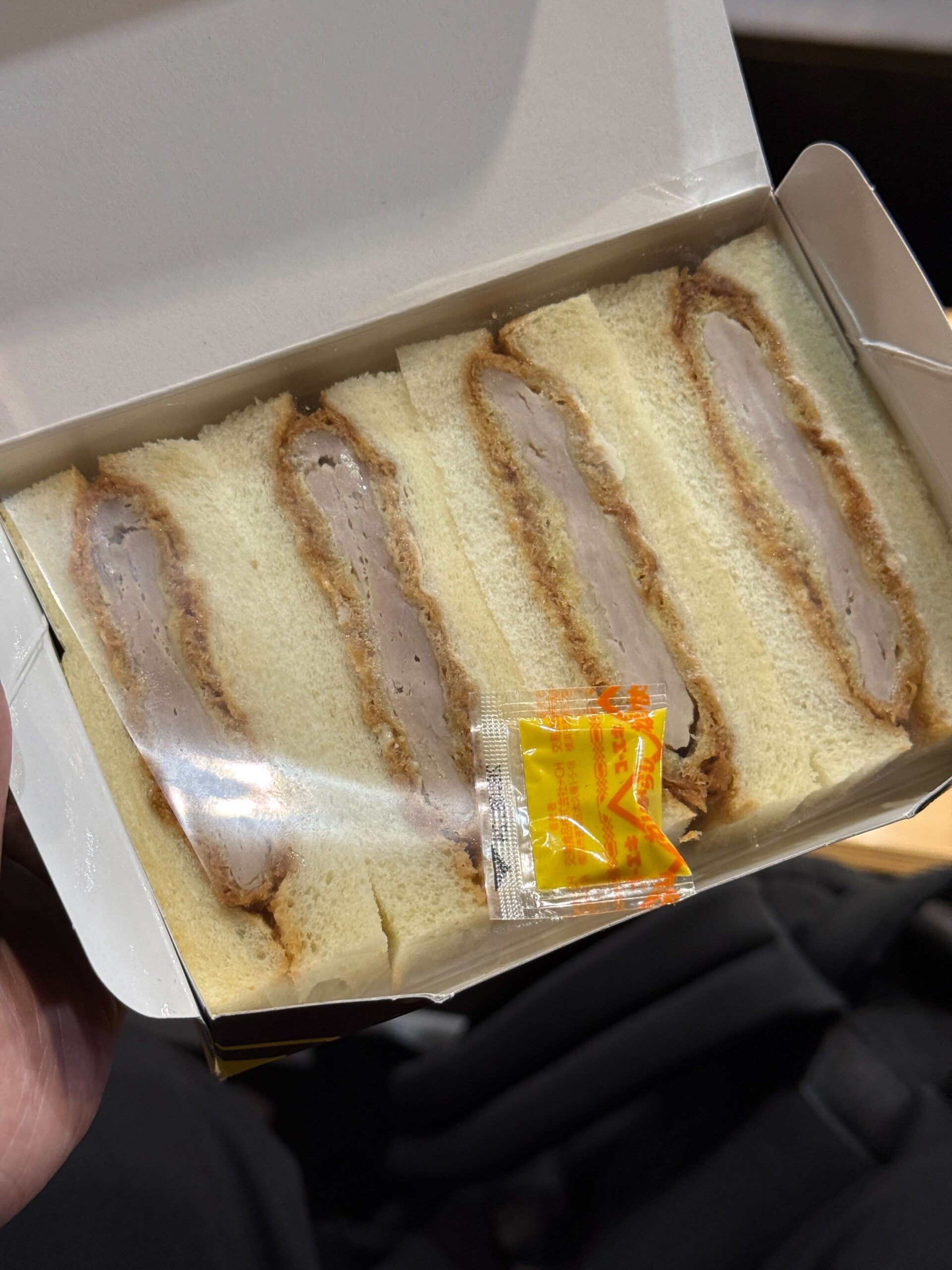
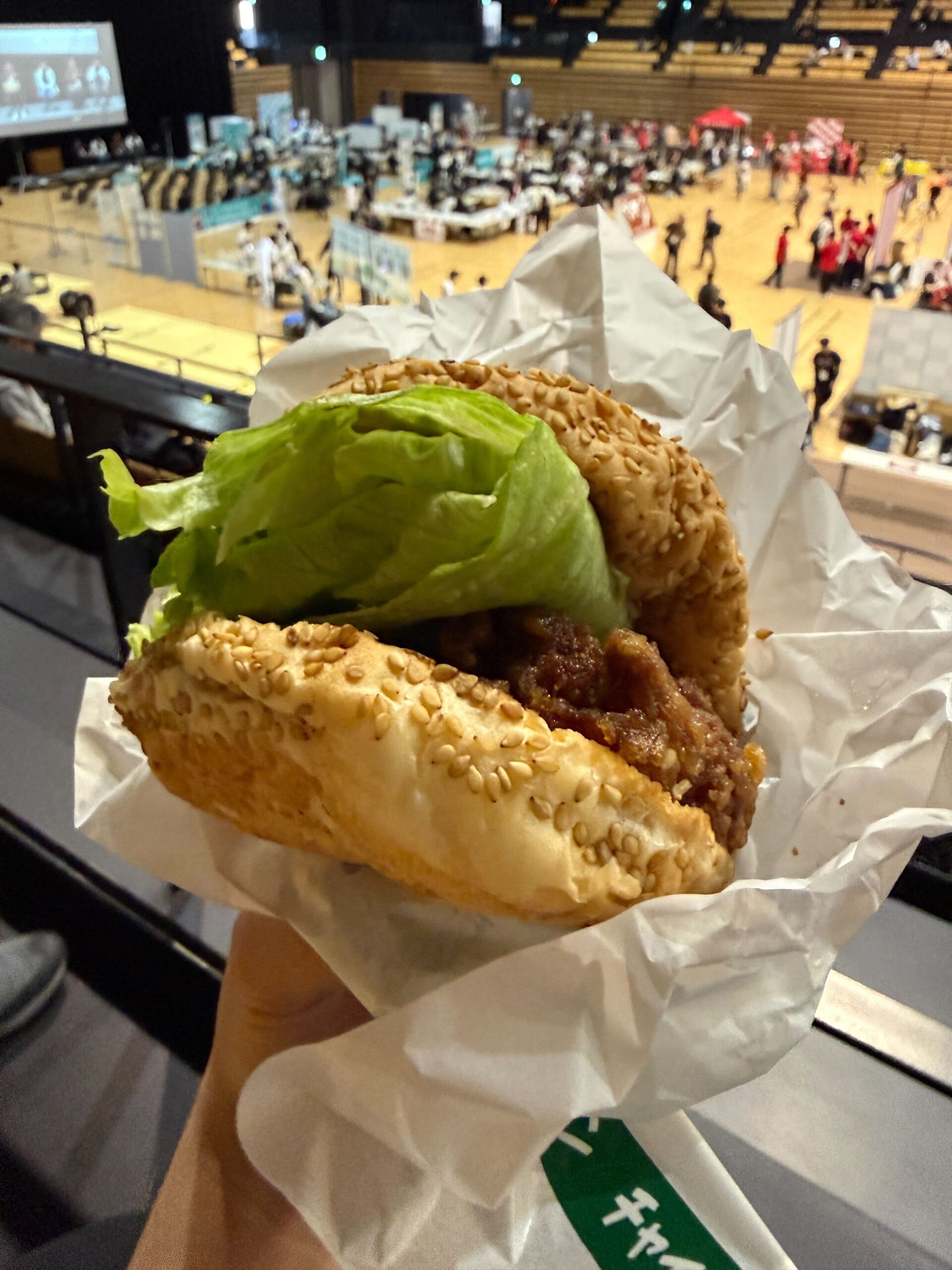
Lunch at RubyKaigi
Day 2 — Rhythm, live coding, sakura, and my first big social night
By the second day I was no longer guessing where to stand. I understood the flow of the main hall, the stamp rally, sponsor alley, and the gentle negotiation of schedule conflicts. I moved with more confidence—still a beginner at RubyKaigi, but no longer a beginner at attending RubyKaigi.
Live code to sound (again, because it was my favorite)
The talk I enjoyed most that week was From Live Code to Sound: Building a Ruby Live Coding Engine by Yuya Fujiwara. It is not only about “music from code,” but a whole idea of performance, timing, and feedback loops—almost like a REPL concert. It felt like proof that Ruby can be serious and playful at the same time.
After sessions, I stepped outside the conference bubble and into Hakodate in cherry-blossom season. The city felt compact and calm compared with Osaka—sea air, slower sidewalks, and spring light that made every walk feel like a break between intense sessions. Goryokaku was unreal—history, sky, and pink petals in one frame—and I felt grateful the organizers chose this city at this time of year.
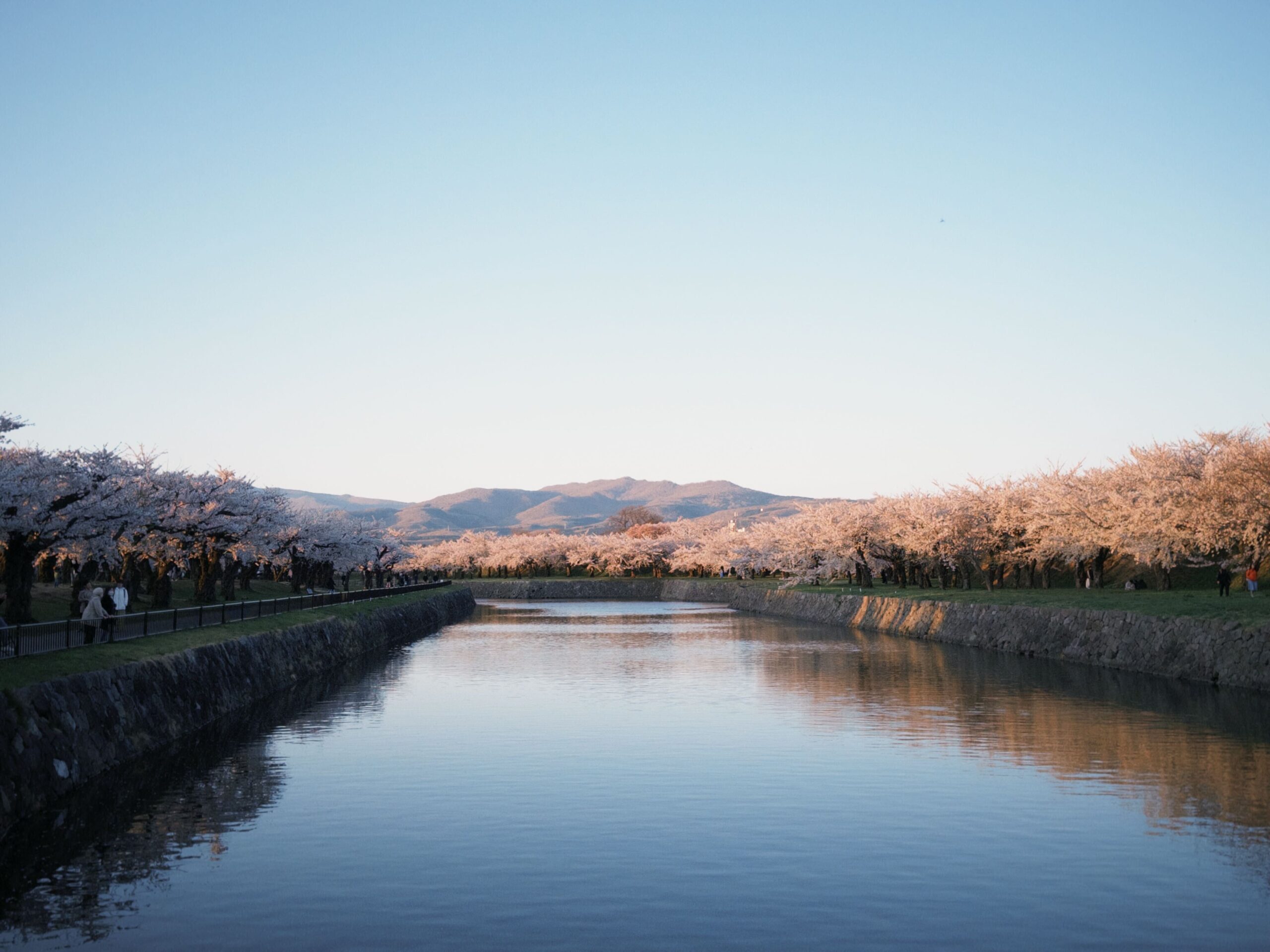
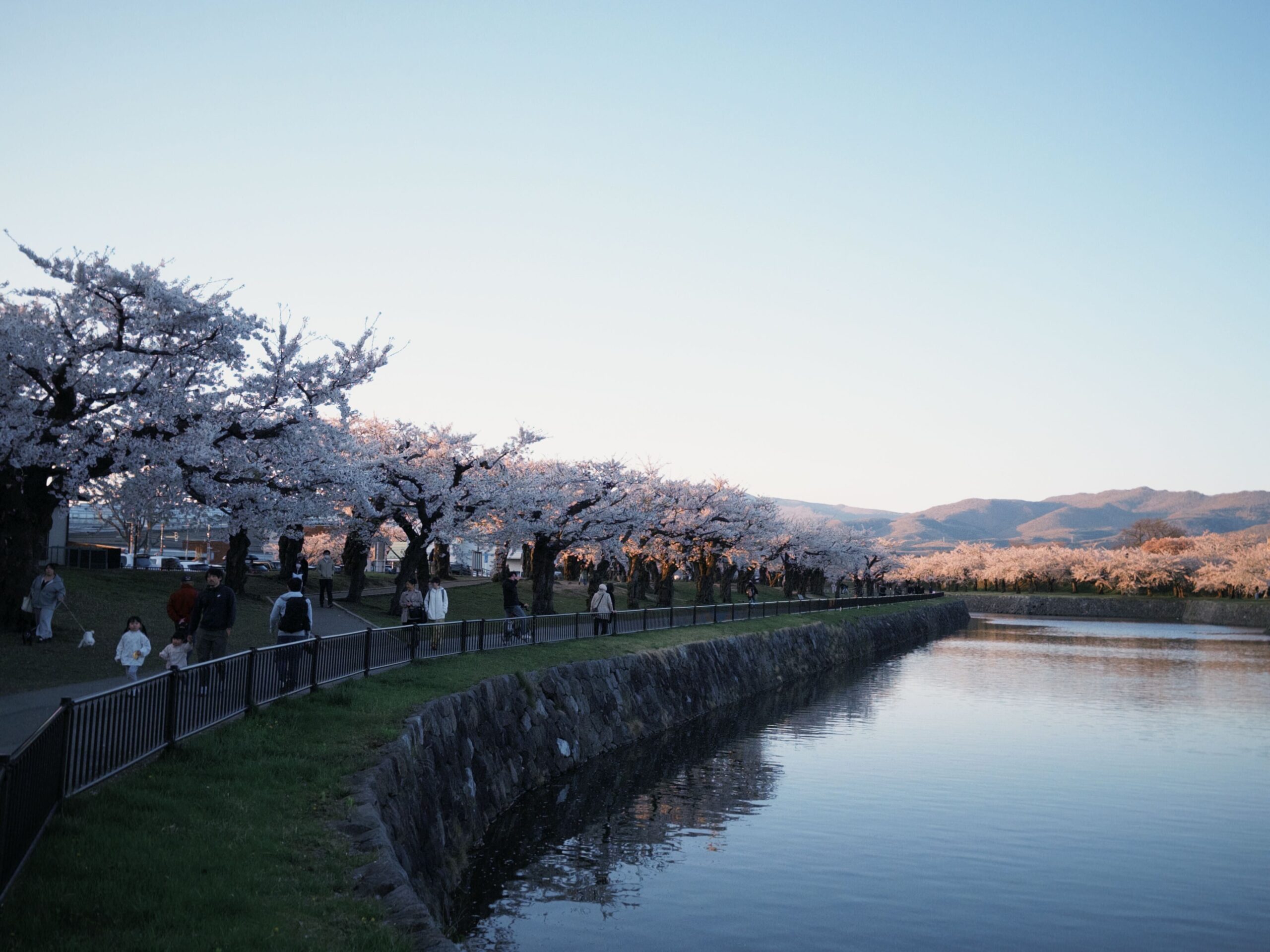

Spring light: Goryokaku and the coast
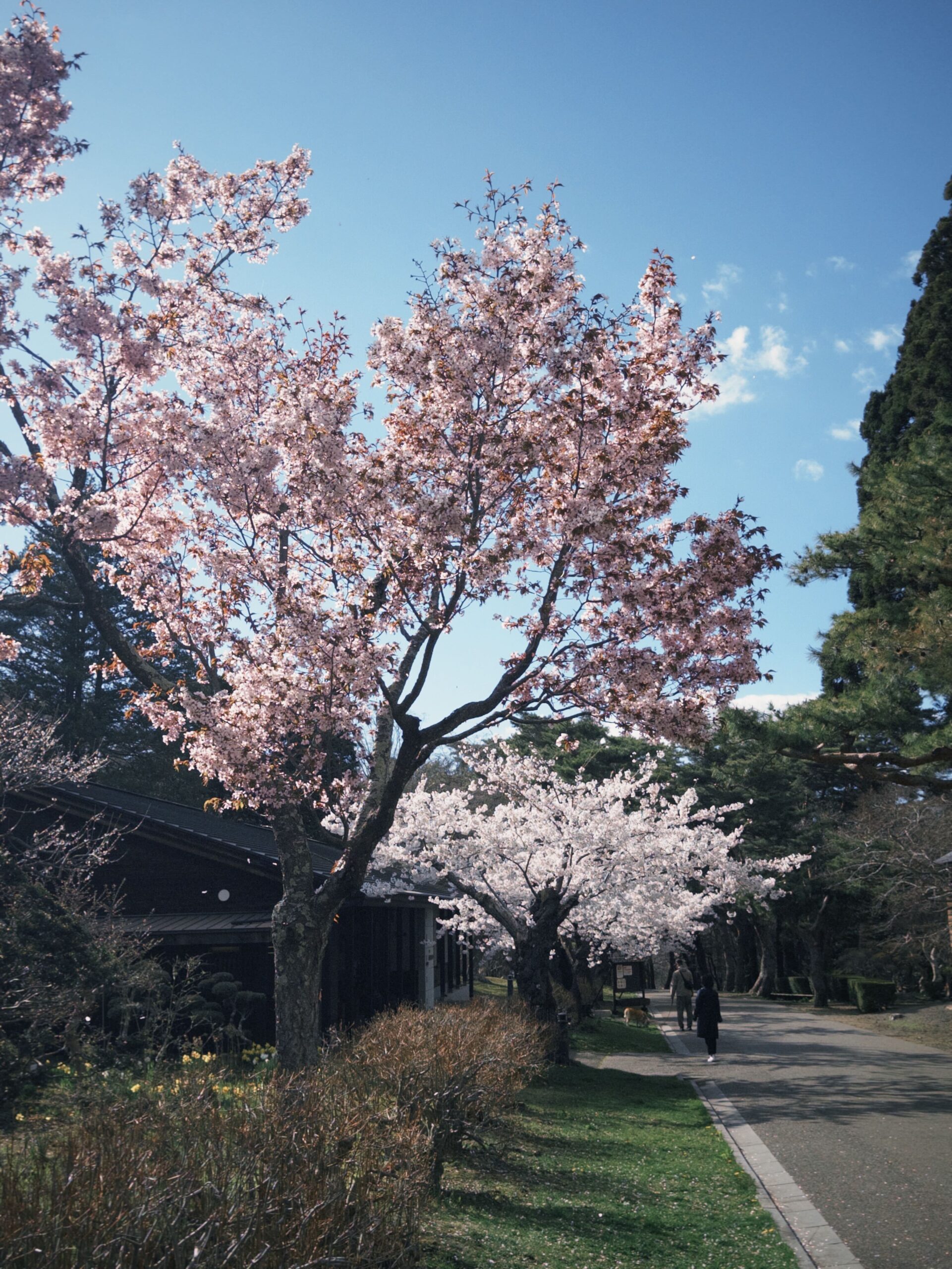
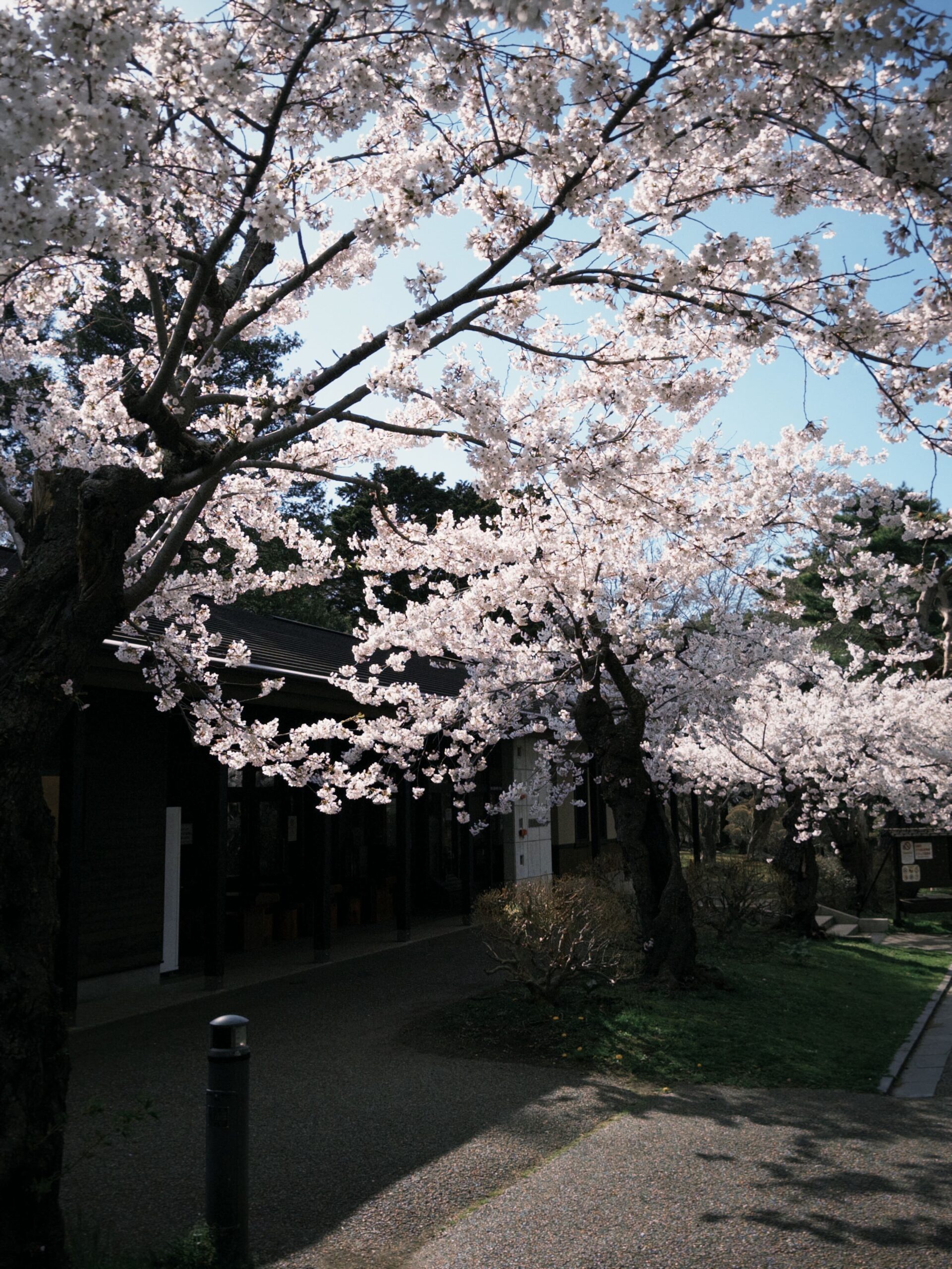
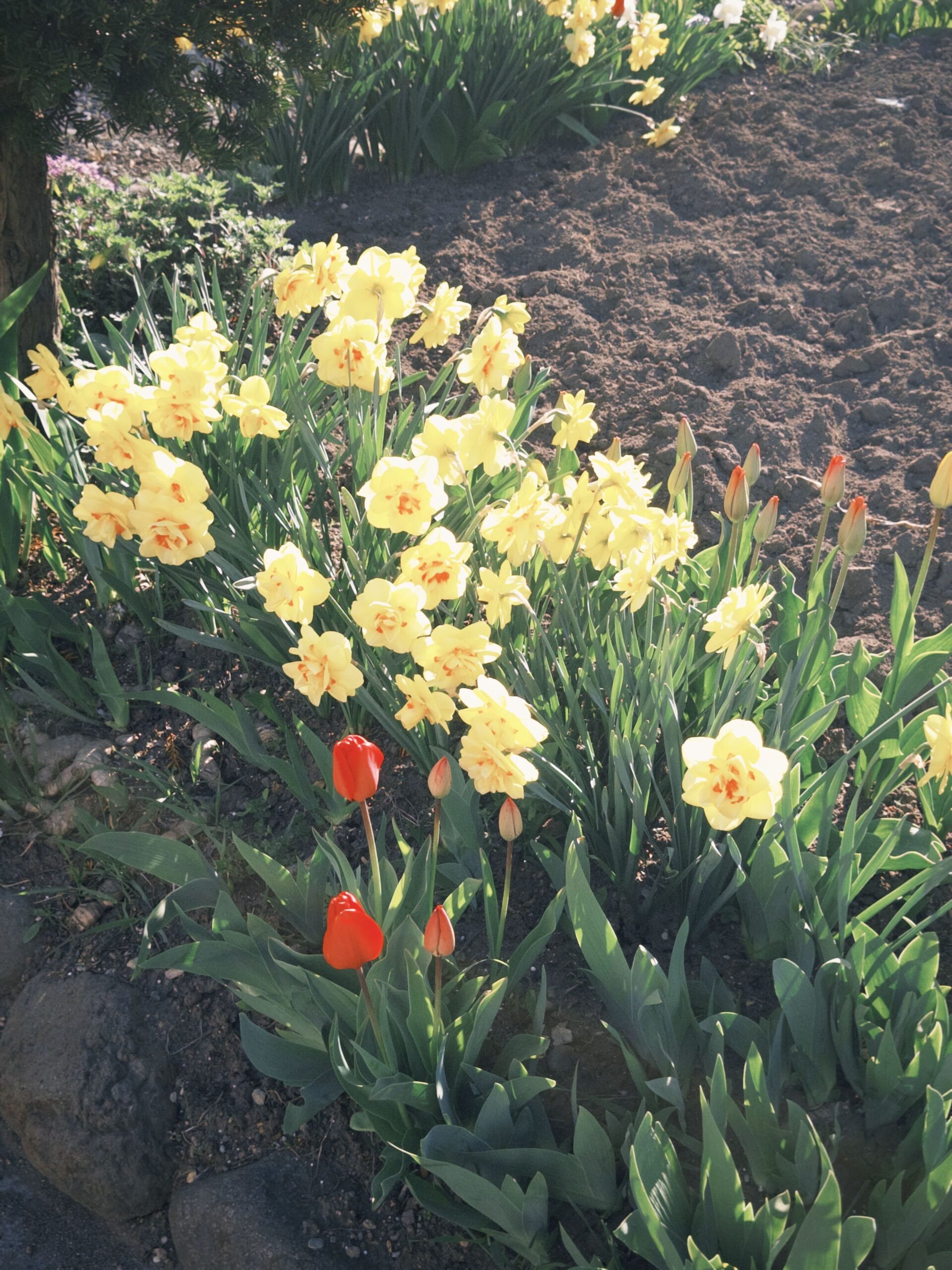
Cherry blossoms at Kousetsuen Park
Later I went up Hakodate Mountain and watched the city spread out beneath me—a view that made the long Shinkansen ride from day zero feel worth it all over again.

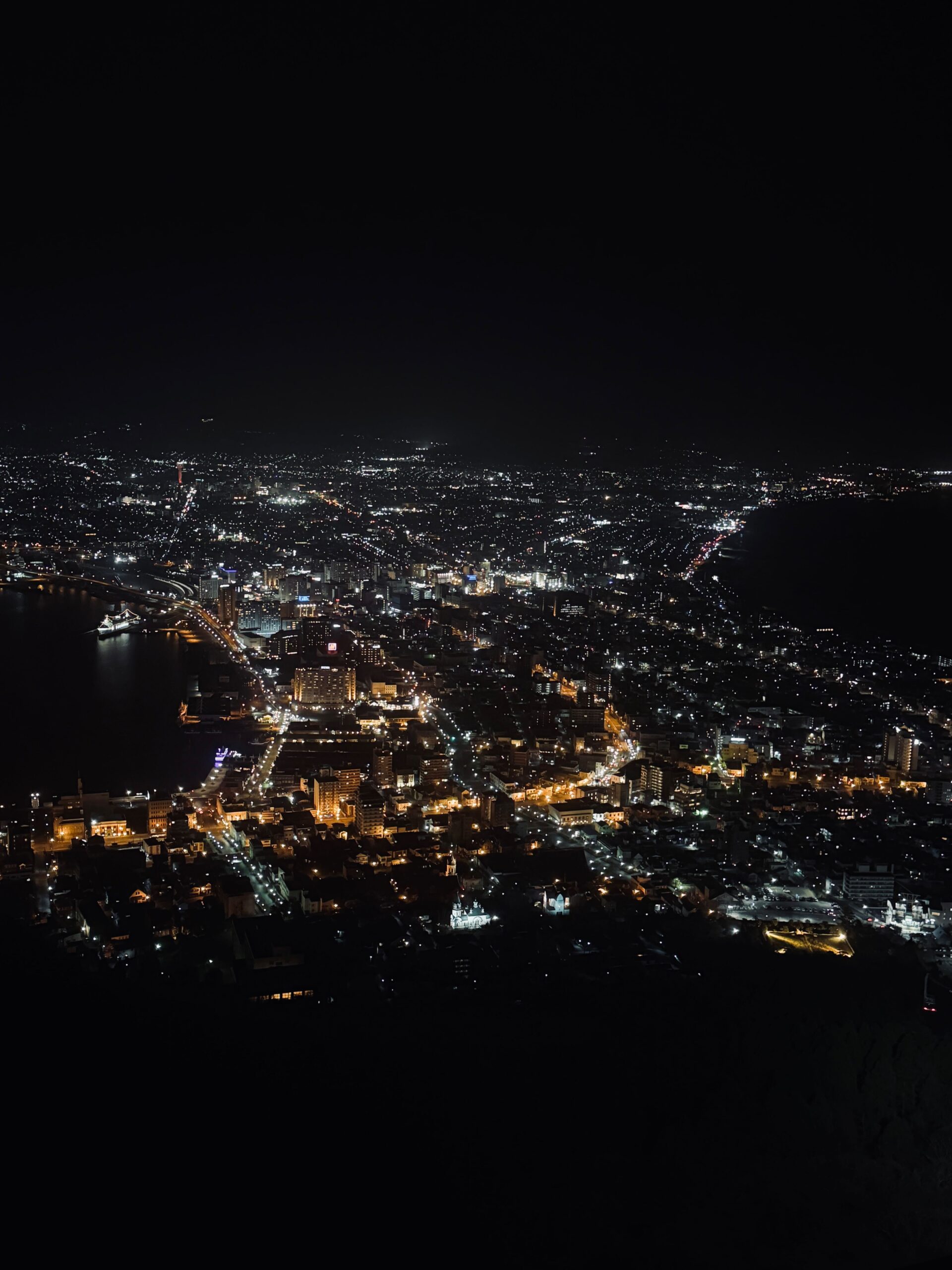
View from Hakodate Mountain
That night was my first big social gathering: an all-you-can-eat sushi event. The after-party energy was different from the daytime hall—louder tables, beer going around, and conversations that jumped from “which talk did you see?” to careers, side projects, and travel tips. I met Rubyists who were generous with explanations, patient with questions, and genuinely fun to share a table with. The technical program is what brought us there; nights like this are what made me feel I had joined a community, not only an audience.
Day 3 — The last sessions, seafood, swag, and the feeling that something had started
The final day had that familiar conference bittersweetness—last talks, last hallway conversations, and the sense that time had compressed. The hall still felt busy, but the mood softened: more photos, more “see you next year,” more swapping contact details between sessions.
Organizers also went far beyond the usual conference shirt: I came home with a hoodie, gloves, a pouch, badges, and other small gifts that felt thoughtful rather than generic.
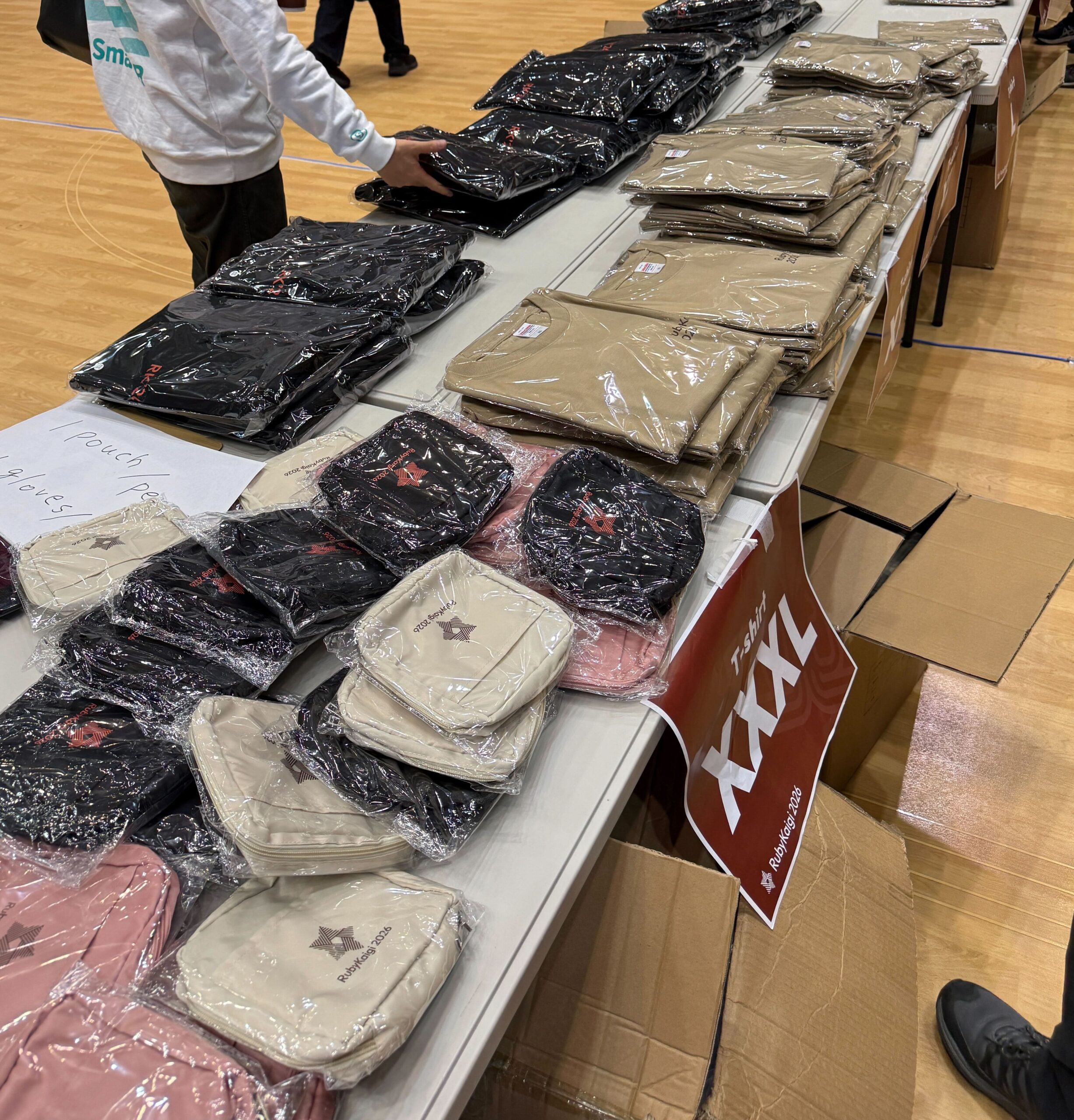
RubyKaigi 2026 swag
The last evening’s social gathering was Hakodate seafood—long platters, shared dishes, and the same easy mix of Japanese and English at the table. If day two’s party felt like “we are still in conference mode, just with sushi,” day three felt more like a closing dinner: people were slower to leave their chairs, happier to repeat stories, and more willing to admit which talks went over their heads the first time.
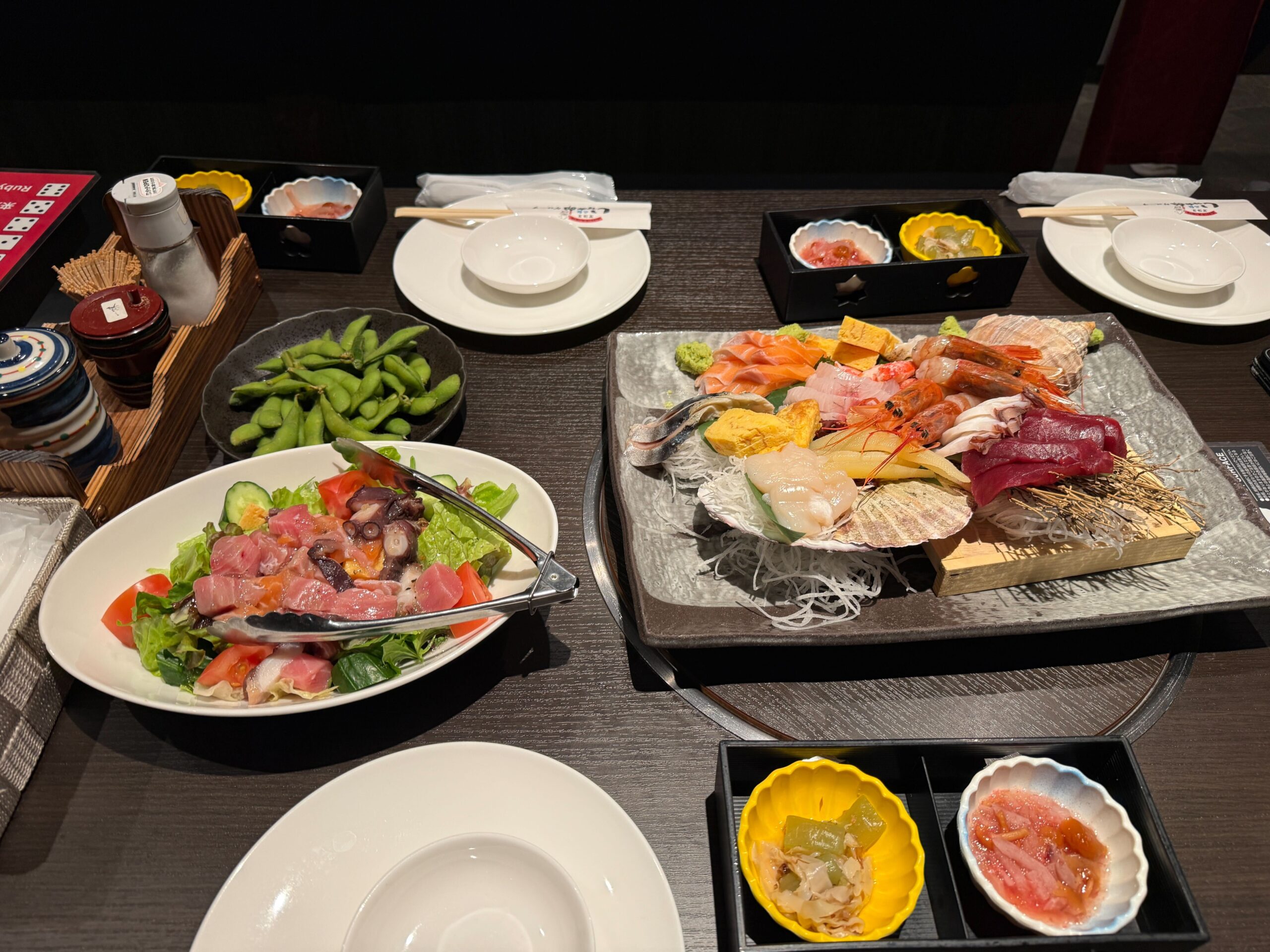
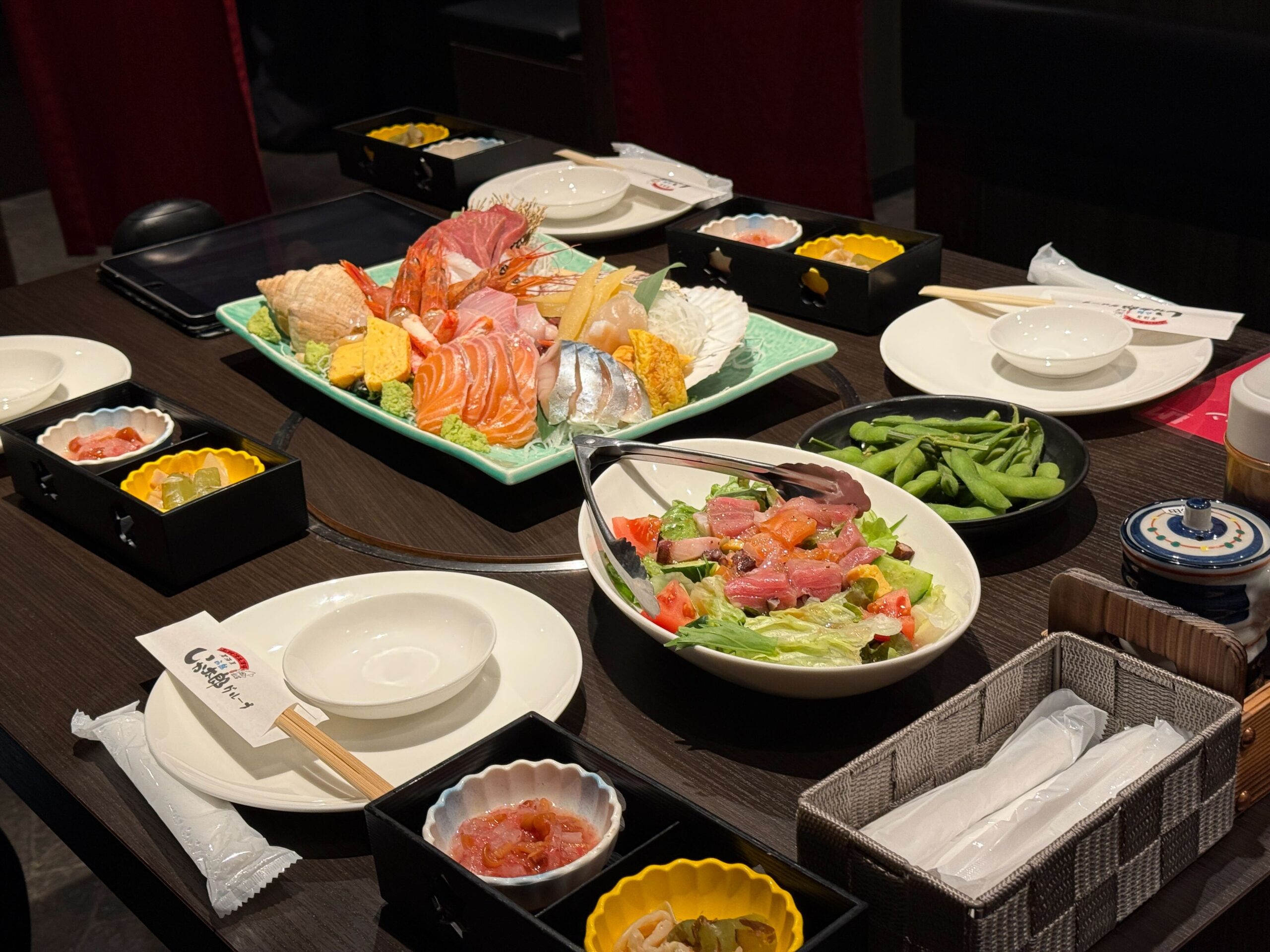
Evening social gathering
Somewhere between trains, talks, and dinners, I also collected the taste of Hakodate—ramen, seafood, wonton men, yakitori—as a parallel thread to the Ruby content. Hakodate’s food matched its port-city identity: lots of seafood tasted simply prepared and very fresh; ramen and wonton men were comforting after cold walks; yakitori nights felt smoky, casual, and friendly. As someone not from Japan, that combination of deep engineering and gentle exploration of the city is something I will remember as vividly as any talk I attended.
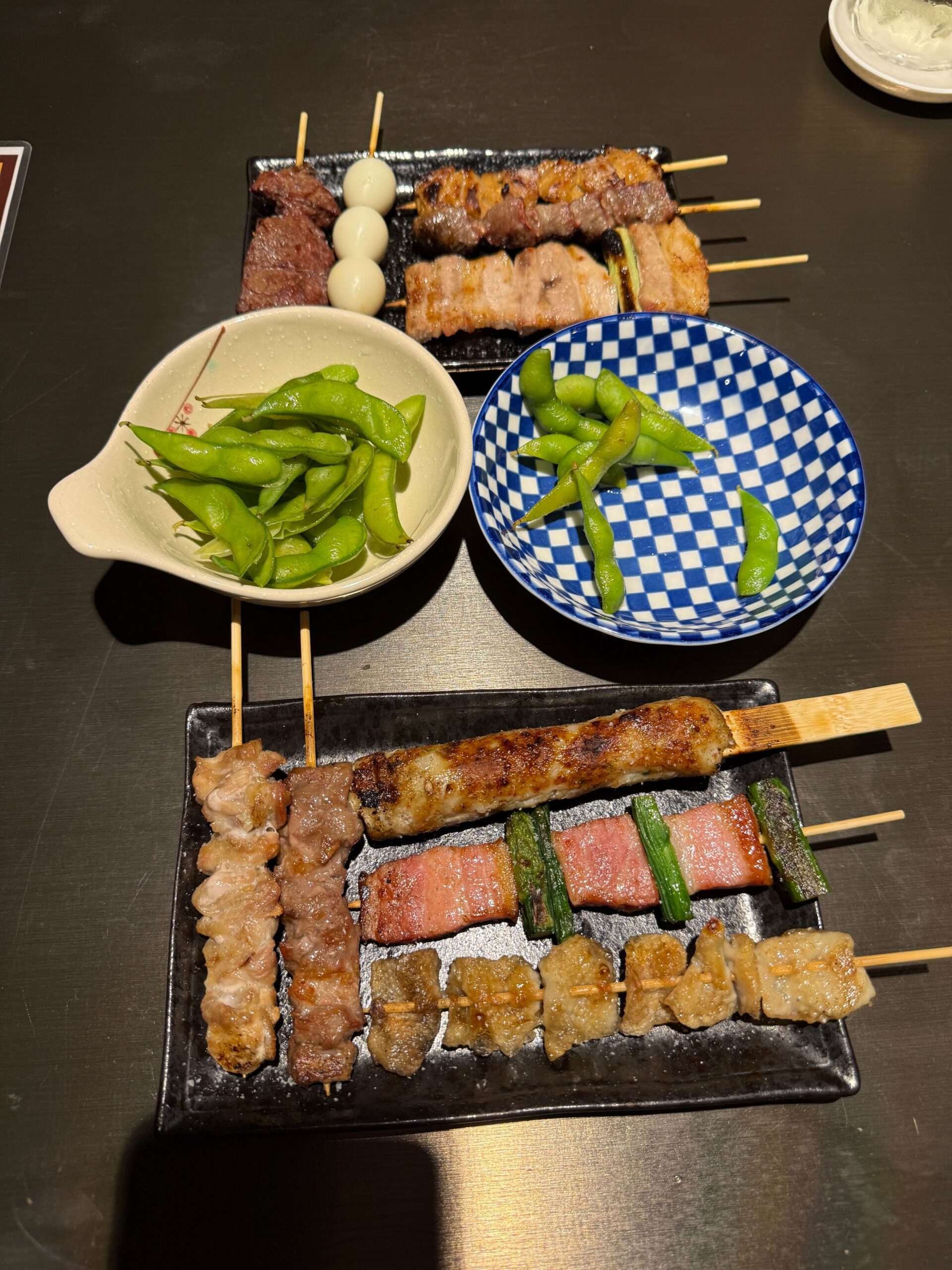
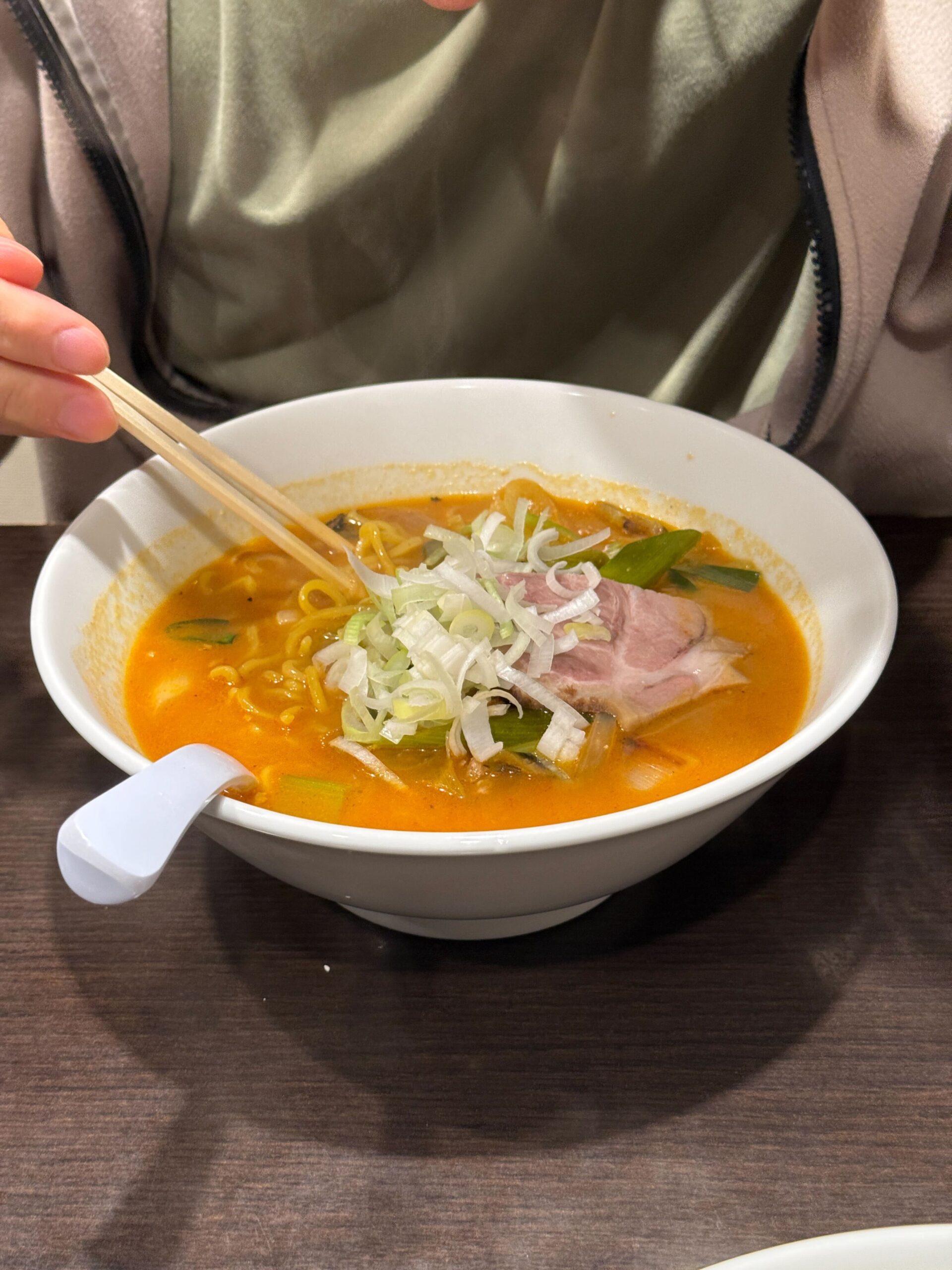
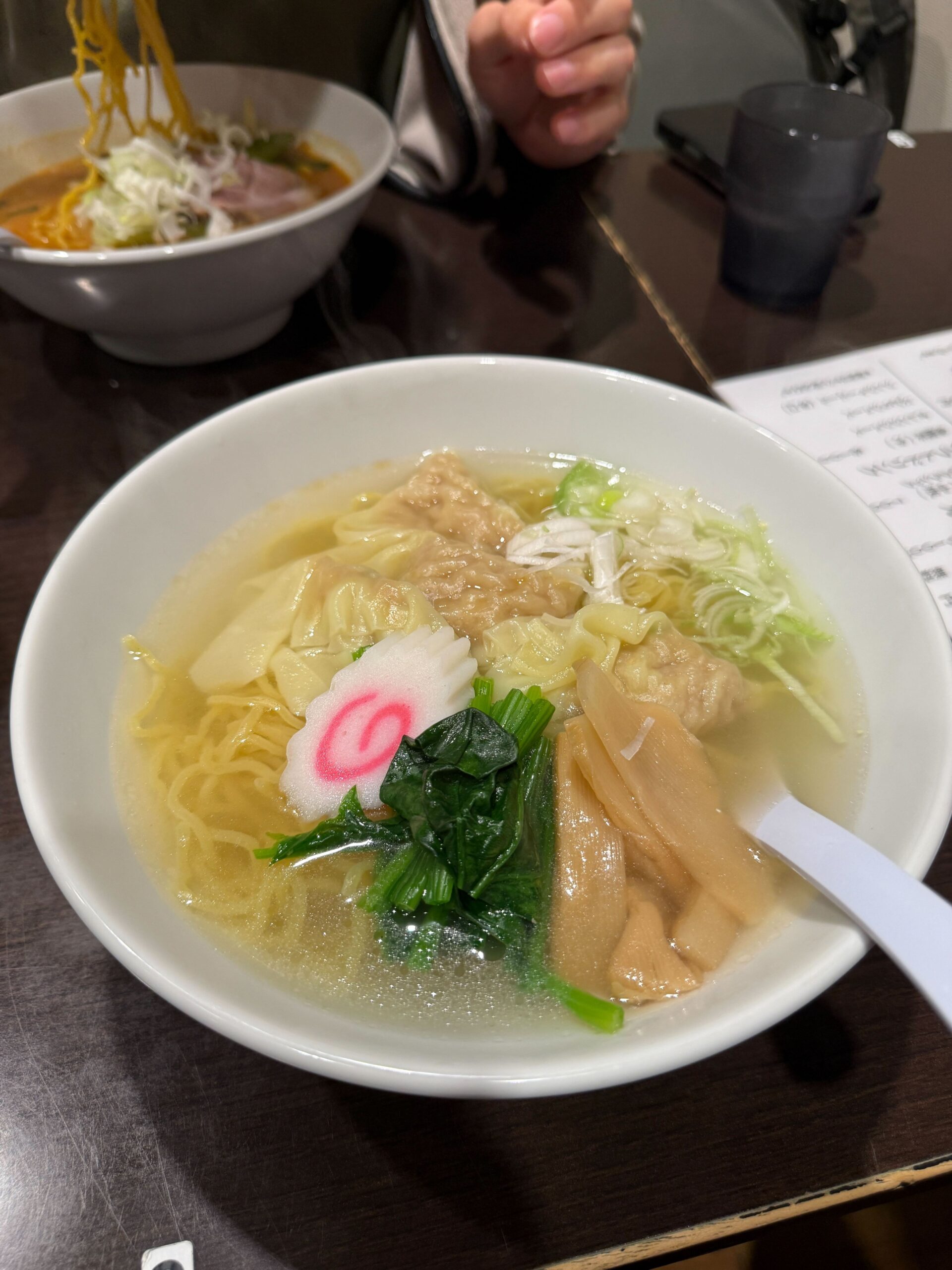
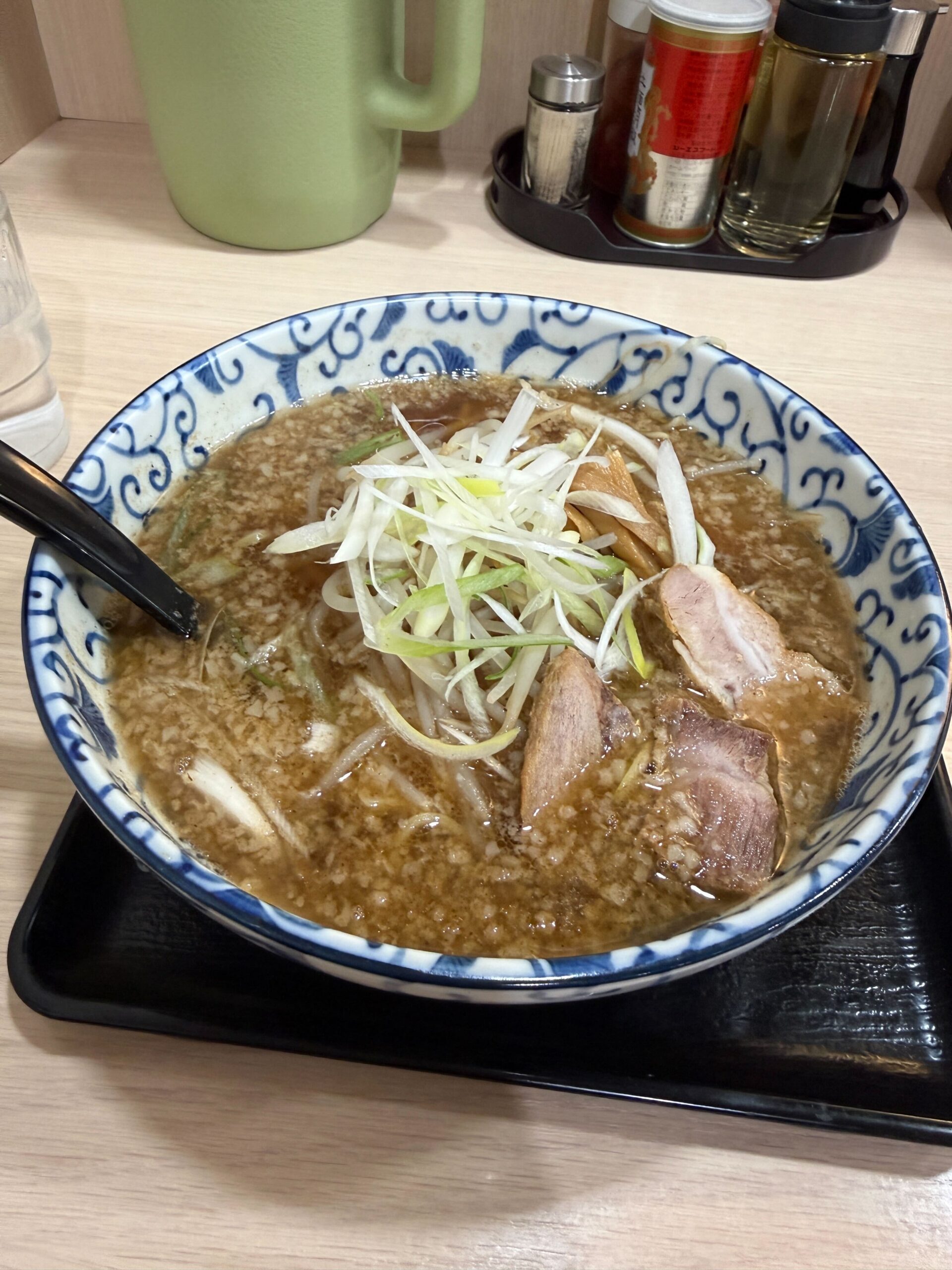
Food in Hakodate
Afterword — Overall thoughts, and already looking ahead
I have only used Ruby and Rails seriously for about a year. Walking into RubyKaigi as a first-timer could have felt intimidating; instead, it felt welcoming. The week gave me three things at once: technical direction (what to study next—from GC and Ractor to tooling like MCP), human context (who cares about Ruby and how they talk to newcomers), and confidence that I am not learning in a bubble.
I also felt proud that Money Forward showed up not only as attendees but as sponsors, helping keep a conference of this scale possible. Seeing the global Ruby community in one place made the language feel less like “a stack I use at work” and more like a living culture I want to keep contributing to.
When RubyKaigi 2027 was announced for Miyazaki, I laughed: I had half-joked that RubyKaigi should go there because I wanted to travel there—and then it became real. Next year, I plan to return, not only for the talks but for another chapter of the same story: big ideas, good food, and people who care about Ruby and about each other.
See you guys in Miyazaki!